"Why not go out on a limb? That's where the fruit is." - Will Rogers

Friday, January 24, 2014

Portraits of my Family

Returning to my village this time felt different. Something was off. Or was it the opposite? Nothing was off. I didn't feel anxious. I didn't feel awkward. I felt like I was home.
The change was slight, but significant.
These people running to greet me and welcome me home are my family.
I am one of them.

PORTRAITS OF MY FAMILY


NENE SALIMATA DIANE (33) - THE WARRIOR
Mother of seven. Uneducated. Illiterate. Rich with knowledge beyond formal education. Opportunist. Survivalist. Will do anything to help her family, no matter how brash or embarrassing. Graceful and deliberate in the way she nurtures her family. Married and pregnant before her 16th birthday. Wants more for her children.


MANE GORY (3) - THE INDEPENDENT WOMAN
Sassy. Boisterous. Gets what she wants. Incredible Vocabulary. Everyone takes care of her, but no one watches her. Roams freely. Fetches her own water. Makes her own decisions. Violent. Adorable. Temperamental. Genius. 


DAHABA GORY (5) - THE (CRAZY) NUT
Constantly covered in dirt. Always starting brawls with the neighborhood kids. Craves the attention that the baby receives, but no longer holds that place. Wild. Uncontrollable. Fragile.


SEN BAATOOHOMA GORY (9) - THE CHAMELEON
Hasn't decided who she wants to be yet, but has made the astute observation that it is up to her. Watches. Waits. Speaks rarely around strangers. Eerie calm for a little girl. Mind always working. Wallflower. Set to bloom into a strong young woman.


ISA GORY (11) - THE ACROBAT
Stoic. Forgotten middle child. Ready to impress girls. Ready for responsibility. Loves to wrestle. Sharp-witted. Incredible break dancer.
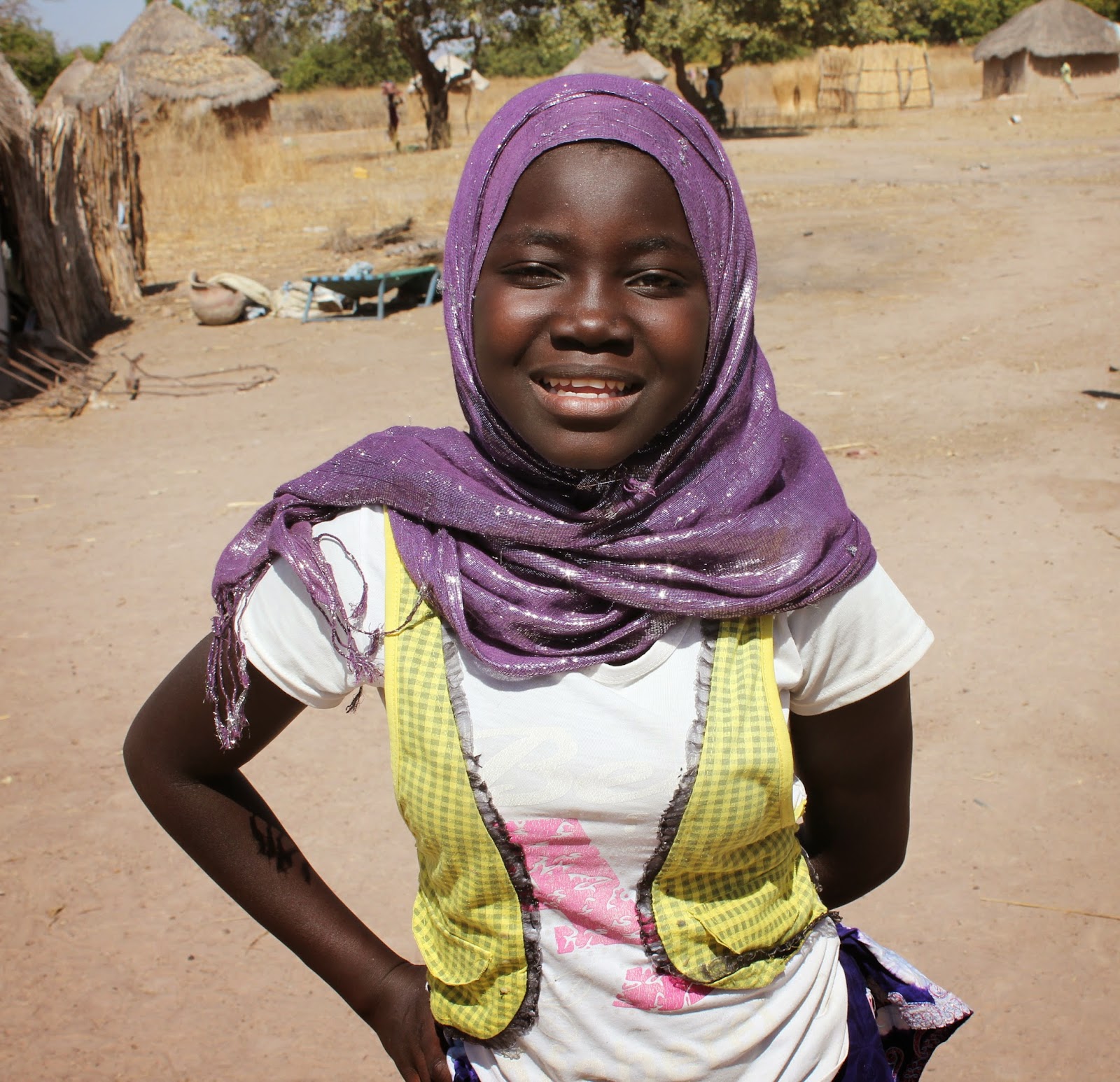


HABBY GORY (13) - THE PRINCESS
Hungry for attention. Devastatingly gorgeous. Trying to find her place in the world. Fight starter. Fake cryer. Second mother to her siblings. Gemini-like contrast between her immature tantrums and wise beyond her years poise. Sometimes I forget that we are not the same age, then I remember that she is still a child. The attention she gets from men in their 30s and 40s makes me cringe. This sort of inappropriate behavior from older men to pre-teen girls is disgustingly common and one of the things I like least about Senegal.


PAPE GORY (17) - THE LEADER
Quiet. Strong sense of self. A man, despite his age. Protector. Adorably kind to his little sister Mane. Silently carries the expectations of the oldest child. Excels in school and a pride of his parents.


SOULEYMAN GORY (45) - THE PROVIDER
Monsieur le Mayor. A Pillar. Not easily shaken. Doesn't raise his voice. Almost always speaks in a near whisper. Loves his wife. One of the only Senegalese men I have ever seen show affection to his wife in public. Frustrated with the near non-existent job opportunities in Senegal. Wants more for his children.


MARIATOU GORY (1 month) 
My namesake. Don't know anything about her personality yet, but isn't she adorable?!


Friday, December 13, 2013

Happy Holidays from Senegal: How you can help!

This year has been full of new encounters, from beautiful traditions to heart-breaking social conventions. I am still sorting out right from wrong, a process that becomes increasingly complicated as my understanding of and respect for Senegalese culture deepens.

As I have mentioned to many of you before, the area of development I have become most passionate about is gender equality. In preparing for the Peace Corps, I braced myself for extreme heat, weird food, and isolation. All centered on myself. I had no idea that the most difficult part would be witnessing the overwhelming inequality faced by women and girls in rural Senegal. As a foreigner working for an aid organization, I am in some ways spared from this treatment, but it is frustrating and painful to watch my sisters and friends treated with disrespect and often violence. Most girls in my village get married at 14 and start having children right away without the opportunity to continue their education.

Behavior change is an extremely difficult and slow process, but it has to start somewhere. I am impressed by Peace Corps Senegal's Girl's Empowerment Camps and this year have decided to organize the Father-Daughter Leadership Conference in my region.

We will invite 28 middle-school girls and their fathers to participate in sessions on goal-setting and action plans for the future, reproductive health and nutrition, and the dangers of early marriage and childbirth. For many of these girls, it will be the first time they have left their village and meeting other motivated girls from around the region will build confidence and encourage continued education.

We need to raise about $3000 to put on this conference, and are counting on donations from friends and family at home to make it possible!

Please follow this link to donate: https://donate.peacecorps.gov/index.cfm?shell=donate.contribute.projDetail&projdesc=14-685-009


Here are some recent photos of what I've been up to:

At the Tambacounda Marathon for Girl's Education with Peace Corps Country Director Chris Hedricks and US Ambassador to Senegal Lewis Lukens

Hanging out with my brother Dahaba and our cousins Dahaba Keeba (Old Dahaba) and Housseinou

Awarding scholarships to driven students at the school in my village


Again, here is the link to donate to the Father-Daughter Leadership Conference:  https://donate.peacecorps.gov/index.cfm?shell=donate.contribute.projDetail&projdesc=14-685-009

THANK YOU AND MERRY CHRISTMAS ! :)

Saturday, September 21, 2013

Early Marriage, Mangroves, and Lions.

My eyes saturate with tears. Empathy is an odd thing. I do not understand why sometimes it overwhelms me to my core, and other times it passes right by me, leaving me feeling nothing.

Her story does not come close to some of the horrifying injustices I have witnessed or hear of, but for some reason, it strikes me deep down. 

I ask Mariyama her age, she says she does not know. Most people in my village don't. We reason out that she had her first child when she was 15 years old, and he is now 8. Her other children are 5, 2, and 1. That makes her 23 years old. The same age as me.

What if I was born here, in this village? A different life flashes before my eyes. Marriage to a much older man in my early teens. The terror as I anticipate sleeping with this man for the first time. It isn't rape, is it? He is my husband. I do not fight it. But I do not like it. The strain on my body, bearing children as soon as I am biologically ready. Being forced to drop out of school, if I have not already. Never learning to read or write. Maybe I am the third wife. My husband rotates between which wife he beds each night. But he pays special attention to me, because I am the newest. Now I have four children. I am 23 years old. I am hardened. 

This fleeting memory of another life hits me like a brick the moment I deduce that Mariyama and I are the same age. My eyes saturate with tears.

* I do not mean to villanize Senegalese men, or claim that all Senegalese couples do not marry for love. My host parents certainly love each other, but I do not know if that happened before their marriage, or grew over the years. Every marriage I have seen in the past year has been the archetype of the young teen marrying the much older man she barely knows. Recently, this was the case with my beautiful 14 year old cousin Diuma. I'm not sure if I feel guilt for inaction, or just general sadness, but every time I think about it, it makes me queasy. 

My host cousin Diuma
A stranger from another village asks to marry Diuma. Her and her family accept, but a couple days later, she changes her mind. She is scared and she doesn't want to leave her family and her village. And she is 14 years old. She barely even knows this man. This shames her family. She is a good daughter, and does not want to shame her family. So she marries him.

I tell my host mother that this is wrong, and makes me feel deeply sad. She says there is nothing I can do.

Should I have done more? Could I have? I almost feel like I have betrayed a friend. I have not seen her since.

Sometimes, I feel utterly helpless. Writing down and sharing my feelings helps me sort through my thoughts.

On a lighter note... Mangrove Reforestation

Mangroves are unique species that thrive where fresh water meets salt water in the Sine Saloum Delta in Senegal. They provide essential habitat to many wildlife species, combat erosion, and bolster soil fertility. Mangrove reforestation efforts have also been suggested to fight climate change.


We travel by shaky boat across deep blue water to the island.


We push in unison to remove the incredibly heavy beached boat with our 120,000 mangrove propogules from the sand.

We lazily float in the cool salty delta as the crimson sun begins to set.


We wake at the crack of dawn, working together in a massive assembly line to unload the propogules, then carry them what seems like miles on our heads to the reforestation site.


We wade barefoot through the muddy ankle deep marshes, destroying our feet on the upturned shells.


The sun glistens off the sandy marshes creating a metallic sea as we finish planting seemingly endless propogules with help from over 100 Peace Corps Volunteers, staff, and local villagers.

It is beautiful and satisfying.

Playing With Lions: less frightening than it probably should have been.


Wednesday, August 21, 2013

Rainy Season: Trees and Parties

Things are really looking up as Ramadan gracefully takes its exit and we remember how much more personable we are when eating breakfast and lunch and drinking water as we please.

About the same time we welcome food and water back into our lives rainy season arrives with force, as if the congratulate us for our hard work.

Rainy Season means it is time to start outplanting the trees in our nurseries and is the busiest and most exciting time for us Agroforestry Volunteers.


Even though Rainy Season is notorious for its hellish skin infections and moldy huts and clothing, it is my favorite season here in Senegal.

It is still over 100 degrees, but when the humidity becomes unbearable and the sky turns an ominous dark purple, you know a storm is brewing. I have never seen such awe-inspiring lightning shows, Back to back to back to back, the lightning dances and ignites the sky from all angles.

Rain brings life and action to Senegal. The wells fill back up and the fields are full. It cuts the heat and reminds us that there is respite from the oppressive sun. The simple pleasure of showering in the cool rain ALMOST makes me forget to torture of hot season.


Korite: Celebrating the end of our 30 day fast and symbolizing clean beginnings and pure faith.


Fresh Blood and Baking Bread: The first things I smell as my host mother wakes me up screaming, Mariatou, come watch the sacrifice!


The Celebration, In Brief
Inharmonious clash of flashy fabrics
Fresh braids and aching scalps
Joy,
In the rare treat of red meat
In the graceful prayers
In the vivacious dance circles
Endless feasting
Family


TRANSPLANT v. [trans.] move or transfer (something) to another place, typically with some effort or upheaval

Yeah, TREES!

Transplanting Acacia Mellifera for a live fence
Plantin' trees with a baby on my back

My namesake Mariatou

Mango Trees.


Sunday, July 7, 2013

On Fasting, Oppression, and Circles

1. Ramadan

30 days. Sunrise to sunset. No food. No water. I find it incredible that millions of people submit themselves to this ritual every year. I find it even more incredible that my friends and family here in Senegal fast in the stifling heat while still working tirelessly in the fields. Why?, I wonder. So I ask.

I ask my host family, why do you fast? What does Ramadan mean to you?

It is a cleansing. It is a spiritual and physical purification. It is a transformation in our hearts. It is a time of serious reflection. What have we done to make ourselves impure? Surely, many things. Have we mistreated our children? Been unkind to our neighbors? Overlooked those less fortunate in a time of need? We reflect. And we abstain. Not just from food and drink. We abstain from using profanity. From negative or spiteful thoughts or words. We abstain from sex. We abstain from indulgence.
When we break our fast after sundown the whole community bonds in the completion of this ritual and gives thanks to Allah for all of our blessings.

I find this explanation beautiful and relevant. I tell my family I will attempt to fast with them, but I am not sure how long I will last because I have never done something like this before. They say not to worry, just do my best and that is all that matters.


2. Comfort
I have had it my entire life.
Physical and Emotional.
But I only just began ruminating on the significance. 
soft pillows
education
air conditioning
unconditional support
nourished potential
burritos.
Here in its absence, its past glory in unobscured. Here in the comfort void.
It often feels impossible.
On the brink of a precipice.
Inexorable heat a filth.
Suffocating oppression of women.
I want to scream.
I want to make everything right.
It is not that easy.
But I am here. I am a part of this. And I wouldn't trade it for the world.
It is drastic, It is awful, It is remarkable.
In a year and a half I will return to the world of comfort. I will drink it up. But I will not forget what it is like to be without.


3. Circles

You are raised in a small town. Everyone looks the same. They have the same color eyes. They have the same color hair. They have the same color skin. Everyone is the same religion. This is not a choice, but a fact. As every person you have ever known has told you.

You are male. It is written that men are more capable than women, and that women must always be subservient to men. Both your mother and father reinforce this fact through their actions and words. You observe your father ordering your mother and his other wives around like slaves. Women are MEANT for cooking and cleaning and serving. This is a fact. Every other family you know functions like this. You did not chose to be born into this life. You literally know nothing else.

A stranger visits your town. She has different skin and different eyes and different hair. You call her mean names and point and laugh at her. Along with everyone else in your town. No one tells you this is wrong.

You do not have a television and you have never seen the internet. You have never even been exposed to the idea that this is not the way it has to be.

As a child your mother and father beat you when you acted out. Now as a father, you do the same to your children. You treat your wives as a second class and teach your daughters that their place is in the kitchen.

How can you be blamed?

Sunday, June 2, 2013

Musings

Bikram - Imagine the temperature of a Bikram yoga studio. Then imagine it is 10 degrees warmer. Then imagine living and working in that yoga studio for 8 months.

The Wet Blanket - Technique recommended by many PCVs. You soak your sheet in a bucket of water right before bed the wrap yourself up like a burrito and attempt to fall asleep semi-cool. I haven't tried it yet but it is getting to that point.

Obama - I held a ceremony presenting my community garden with tools from my grant and told them how the funding came from Obama's Food Security Initiative. We all said " A Baraka Obama " which means Thank you Obama, but sounds like Barack Obama. It made me smile.


Community Garden Ceremony


Violence - It is overwhelming. Always dancing on the line between playful and malicious. My brother punches my sister, they laugh. My sister kicks him in the ribs, they cry. Violence is the answer. My mother slaps both of them for fighting, they cry. My uncle greets my sister with a punch in the back, they laugh. My mother throws a shoe at my brother's head for not listening, they cry. It is constant. It is ubiquitous. Sometimes it is too much for me to handle and I have to get up and walk away. Sometimes I am shocked at how used to it I have become. Although this casual violence is pervasive throughout Senegal, I know that it is by no means limited to this country. I am lucky to have experienced so little violence in my childhood and I thank my family for the way I was raised.

#1 - I avoid peeing between the hours of 10am and 4pm because it is so cumbersome to peel off my sticky pants and squat as the sun beats down on my back that I'd rather hold it. I basically sweat out all the water I drink immediately anyways so it usually works out!


Sweat. Eat Mangoes. Repeat.

Sand Stormz - Perks of living in the Sahel! Before today I thought I had experienced 4 or 5 real sand storms. I was wrong. Today I was seriously close to calling our Safety and Security officer and telling him that there is a natural disaster going on in southern Senegal, but instead I texted an older volunteer and she said - this is normal - welcome to rainy season! The storm was rain free this time, but complete with menacing dust tornadoes and flying objects. My large wood fence pole fell over and cracked my shower bucket in half and my brothers thatched roof flew off into my backyard and crushed the tent I sleep in (don't worry, it survived!). My cat and I sat in the middle of my bed under a towel for about 45 minutes until the storm died down. When we emerged from the towel, EVERYTHING inside my hut was covered in a thick layer of dirty sand. As I have mentioned before, it is hard to imagine feeling clean again.


My ladies in the garden.

Point of View - I often feel like I am outside of my body looking in on this experience. Sometimes I am my old self looking at me living in a hut in a village without showers, electricity, or take-out, and I feel like I am accomplishing something real. Sometimes I am a member of my host family or village and I see myself laying on my foam mattress in my own hut reading my kindle, and I feel a bit guilty. While I am trying to "get through" these two years, my family knows nothing different. What's more, the life I live with my own bed and latrine, the ability to travel around Senegal, buy mangoes whenever I feel like it, and even talk on the phone with my friends in other parts of Senegal, is luxurious and even borderline extravagant. No one in my family has ever or will ever have their own rooms. My siblings literally sleep 4 to a mat on the hard floor. It is crazy to feel like I am this resilient volunteer surviving nearly unbearable living conditions, and on the other hand probably be the most comfortable person in my village.
But I wouldn't say I feel sorry for them either. People here are just as happy, just as depressed, have problems and joys, love and hurt, just like people in the U.S. It is all about point of view. I grapple with perspective when this journey becomes the toughest, but ultimately I know I will carry this with me for the rest of my life, and that helps me continue day to day.


I like to look at this quote when I'm feeling a little down:
"Beyond a wholesome discipline, be gentle with yourself. You are a child of the universe no less than the trees and stars; you have a right to be here and whether or not it is clear to you, no doubt the universe is unfolding as it should"
- Desiderata - Left to me by the awesome Nicky Ulrich 
(google the whole quote if you're interested, it is very nice)

Sunday, April 28, 2013

The Little Things

Each evening as the fiery hot Senegalese sun sets over the sparse, dust-tornado-ridden plains of Tambacounda, my body literally swells with joy (or is that just the heat?) that I have survived another day of this extreme adventure known as Peace Corps West Africa.

I eagerly await the mid-night temperature drop from the 110s to the 90s, then laugh hysterically at the absurdity of my life, and wonder if the malaria medication Mefloquin (which most people have switched off of due to increased anxiety) is making me crazy, or if I'm doing that all on my own.

I then proceed to take my daily "shower" which consists of pouring a bucket of boiling hot water over my head (no, I do not prefer my water to be hot enough to cook an egg, but there is no way to keep the water cool, even if it is in the shade all day).

The best part of my day is the two hours from 7pm to 9pm we spend lying around waiting for dinner. Often all eight of my immediate family members and I lay on one stick bed laughing and cuddling and looking at the stars. A soft breeze begins to cool us off and my youngest siblings fall into peaceful sleep. These are the moments that make me feel full and infinite.

The ensuing dinner experience is not the best part of my day. Twelve of us crowd around a single bowl of millet, grabbing handfuls with our filthy hands. After about three bites my apetite is gone, which is fitting because that is about the time the food runs out.

BUT, that's not what I wanted to talk about. I wanted to talk about: the Advanced Gardening and Vegetable Production training I put on in my community garden a couple days ago! As the first major event I organized myself, it went fairly well, but there are definitely improvements I can make for next time.

Planting lettuce and jaxatu in the nursery


The Sitch: Program Training Assistant Youssapha Boye came to my village to do a hands-on training on soil fertility and amendments, vegetable nurseries, and natural pest management.

Lessons Learned: 
1) Senegalese Time - As Youssapha put it, Senegalese have "no concept of time", and the majority of participants showed up to the 9am training at about 11am. If any of you know me well, you know I am a huge fan of punctuality, so this was frustrating even if to be expected. Next time I should account for this and ask people to arrive much earlier that I plan on starting.

2) Prep Work - The day before the training I went on a bit of a scavenger hunt to find everything I would need for the soil amendment and natural pesticide demonstrations: 250g of garlic and onions, hot pepper powder, liquid soap, one sack of wood ash, one sack of charcoal, a bucket full of neem leaves, a sifter, a tablespoon, 3 large buckets, 3 sacks of manure, a mortar and pestle, seeds, shovels, rakes, etc. Needless to say I did my best but next time I will start this earlier.

3) Accountability - Other PCVs recommend reminding people of your training in person everyday for at least two weeks leading up to the event. Besides being a lot of work this seemed a little excessive to me, but I was disappointed that not everyone I wanted to be there showed up. We did have 44 women attend and I think they got a lot out of it.

At the end we passed out vegetable seed varieties suitable for the climate in my village:
- lettuce - hibiscus - eggplant - bitter tomato - hot pepper - parsley

Learning how to make natural pesticides to spray on the vegetables

Overall the project was successful and I got a lot of positive feedback from the women. A couple of days later when I went to help out in the garden, I was really pleased to see women double-digging garden beds and amending the soil like they learned in the training.

Final thought: While I do find what most people think of as the main purpose of Peace Corps very important: disseminating technical training and knowledge to aid international development, I am beginning to put more weight on the 2nd goal of Peace Corps: helping promote a better understanding of Americans with my host country. Especially living in a predominantly conservative Muslim country, bordered by Mali and Mauritania which are exposed to Extremists, often with very anti-american sentiments.  I am proud to share that Americans can be humble, hard-working, and kind, and do care about what is happening in the rest of the world.

Studying Environmental Sciences at Berkeley, I learned a lot about the problems we face in the United States (overwhelmingly of our own creation), and had countless discussions on corruption in our Government and corporations. It wasn't until really living in another country that I fully appreciate the opportunity we are afforded. Now, for the first time, I feel sincerely proud to be an American.

Now: Off to spend my 23rd birthday with my sister in Argentina! REALLY looking forward to the Weather and Wine :)

PEACE OUT